
Introduction
This guide describes how to configure a license server machine that manages floating licenses and how to connect development hosts to that license server. Read the following Q&A, which covers the basics of floating licenses and their management.
What is a floating license?
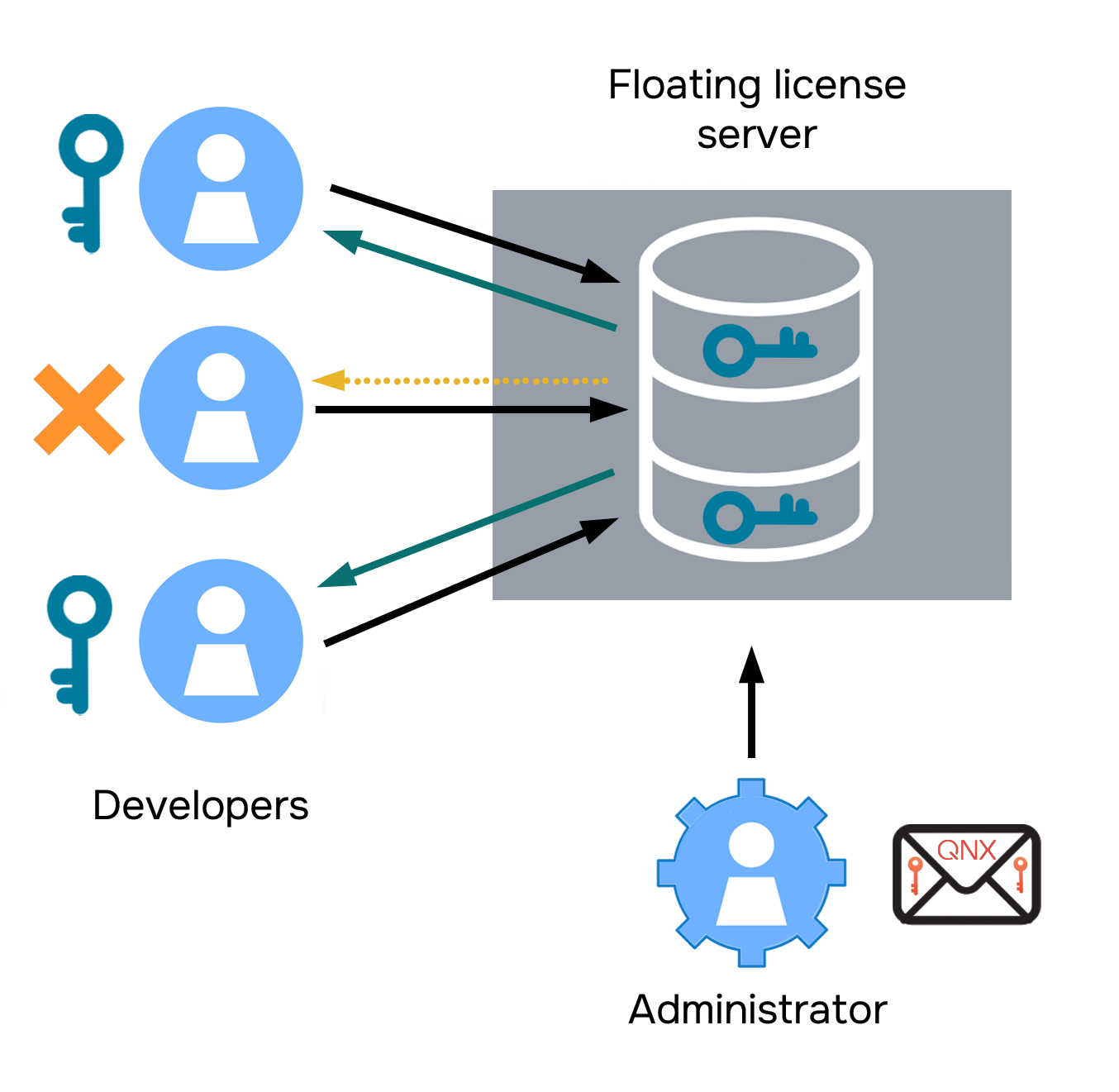
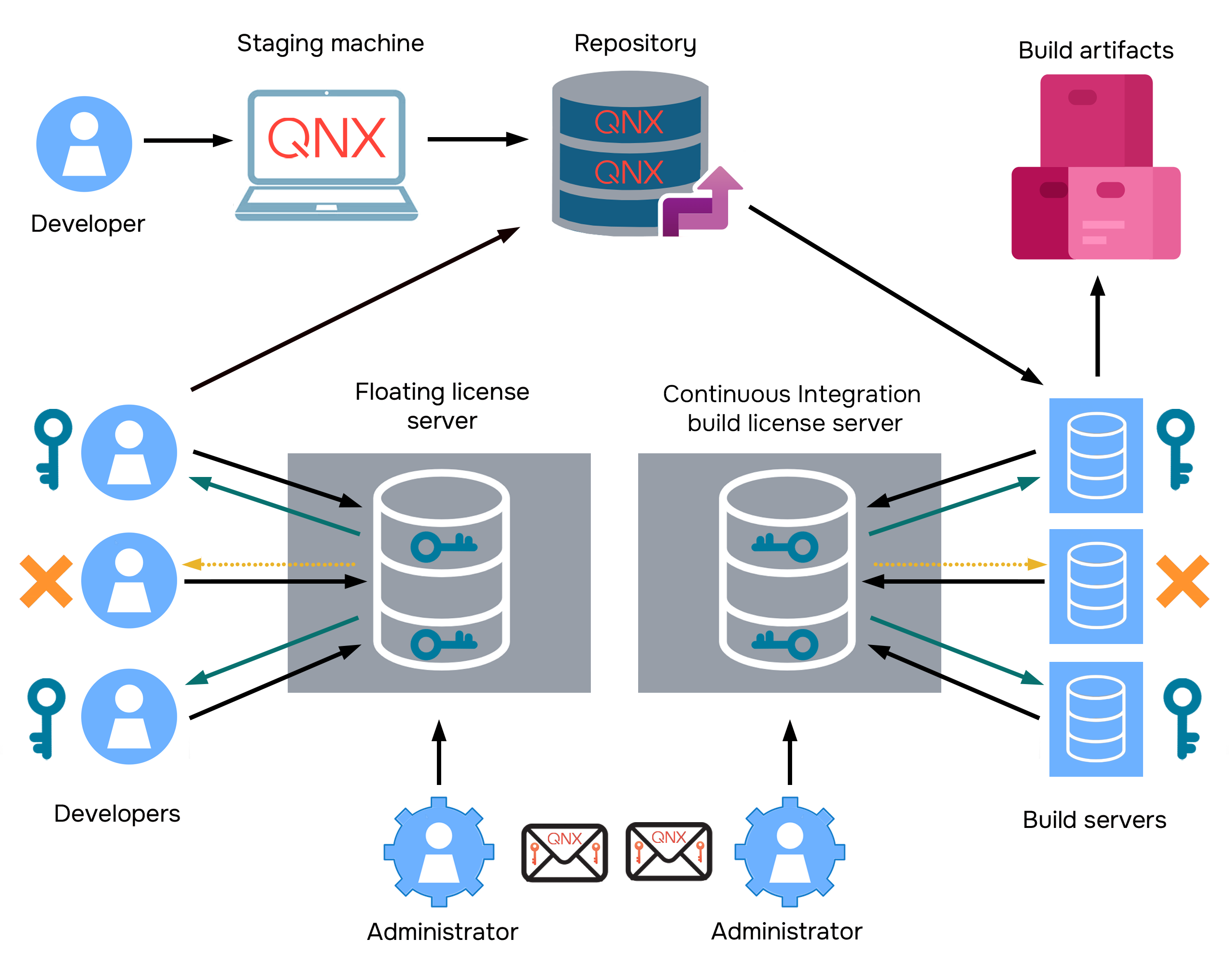
As shown in the figure, developers and build servers acquire their licenses separately, even though the process looks very similar for both. Their license keys, license files, and license servers remain separate. A developer responsible for configuring new installations sets up the staging machine, where QNX-deployable installations are created. These QNX-deployable installations are placed in the code repository, where developers working on code commit their changes. These changes serve as the basis for automated builds. When a trigger activates the build servers, they build these changes, producing build artifacts.
For more information on build server licenses, refer to the Continuous Integration Build Server License Management Guide.
To combine two license keys of the same type in one license key file, do not overwrite the file. Instead, append the license features provided to you by your QNX representative to the existing license key file on your license server. Duplicate feature names are expected.
For more information on combining licenses in one license file and for the list of restrictions, go to the FlexNet Publisher's License Administration Guide. The guide is typically placed in home_directory/flexserver/docs/ when you install the floating license package, or refer to enduser.pdf, available through the QNX Software Center with your QNX SDP installation.
What is license management?
Floating license management automatically manages the floating license keys for development hosts that run QNX SDP. Specifically, it allows a development tool, such as the QNX Momentics IDE or compiler, to request a license key from a server that manages the floating licenses. If a key is available, the server assigns it to the tool, allowing the tool to run. The server subsequently reclaims the license key after the tool no longer needs it, enabling other tools to access the key.
Refer to the Creating and Deploying Installations of QNX SDP in Large
Organizations
chapter in the QNX Software Center Guide
for more details.
How do developers sign out a floating license key?
- there is a local license key for this product
- the product license key includes the desired features
- the license key is activated
- the license key is not expired
- the server has an available license for this product
- the license server key is not expired
| Release | Utilities |
|---|---|
| 7.0 | mkefs, mketfs, mkfatfsimg, mkifs, mkqnx6fsimg, mkxfs, qcc,q++ |
| 7.1 | mkefs, mketfs,
mkfatfsimg, mkifs,
mkqnx6fsimg, mkxfs,
qcc,q++, mkqfs, secpolcompile |
| 8.0 | mkefs, mketfs,
mkfatfsimg, mkifs,
mkqnx6fsimg, mkxfs,
qcc,q++, mkqfs, secpolcompile, coreinfo, diskimage, dumpefs, dumpifs, mksquashfsimg, traceprinter, use |
How long can a development tool use a floating license key before the key is freed up for another user?
A development tool can use a floating license key for as long as it keeps running.
When a development tool, such as a command line tool or QNX Momentics IDE,
terminates, it holds the license key for a short period of time (minimum 30 minutes). The license server
then reclaims the key and makes it available to other developers. This linger time is intended to
prevent developers from losing their license key prematurely. Its value affects the number of developers
who are able to actively use a single floating license on a given day and is, therefore, taken into
consideration when pricing the floating licenses. For more details, refer to the Environment variables related to floating licenses
section of the
Configuring Development Hosts to Use a Floating License
chapter of this guide.
How do I deploy development licenses licensed under floating licenses to developers?
To deploy floating licenses, use the myQNX License Manager. For details, refer to the myQNX License Manager and QNX Software Center User's Guide.
To use a deployed floating license, a developer must activate the license and configure their
development host, as described in the Configuring Development Hosts to Use a Floating License
chapter.
By design, both 7.x and 8.0.x license keys are compatible with QNX SDP 7.x. To prevent the QNX SDP 7.x users from consuming a 8.0.x license, you can create two license servers and separate 7.x and 8.0.x licenses.
What do I do when my subscription-based license expires?
If you are a developer and your license expires, contact your administrator.
If you are an administrator, you can check the status of support plans via myQNX License
Manager. Contact your QNX sales representative to renew your license in advance of the
upcoming expiry date. After receiving the new license information, you need to redeploy the
QNX deployable installation to developers. Refer to the Creating and Deploying Installations of QNX SDP in Large
Organizations
chapter in the QNX Software Center Guide for more details
on deployed installations.
You also need to update the license file on the floating license server with the new license information.
qnxsoftwarecenter_clt -addLicenseKey <key>qlicensesection in the QNX Utilities Reference for details.
How can our development team help ensure compliance with floating license terms?
For floating licenses, you can simply launch any QNX SDP program that performs a license check. If the program launches without generating a license error message, you can assume that it has obtained a floating license key successfully.
It is important to verify the floating license log on the floating license server to ensure compliance.
Programs that perform a license check include, but are not limited to, the QNX Momentics IDE, QNX Toolkit, and the command-line tools mentioned above.
checkout failederrors, such as
No such feature exists,
Version of vendor daemon is too old,or
Floating license no expiration date,we recommend that you install the latest version of the floating license server. To do so, follow the instructions outlined in the
Install the floating license server packagesection of the
Preparing to Configure a License Serverchapter of this guide.
Keep in mind that the above errors can occur for other reasons. Please update your floating license server and check if errors persist before contacting technical support.
How many developers does each floating license support?
Usually, QNX doesn't limit the number of developers that can share a floating license. A floating license authorizes you to install the software on multiple computers, providing that each floating license is used by only one developer at a time.
However, in some circumstances, the maximum number of users may be limited. Before deploying a license, check its license certificate to see how many developers the license supports. For instance, if you have a three-user license, deploy the license to a maximum of three users. To further ensure compliance, we recommend that you perform internal audits of license use.